India Probable Playing 11 for T20 World Cup 2026: Complete Squad Analysis, Strategy & Match-Winning Combinations
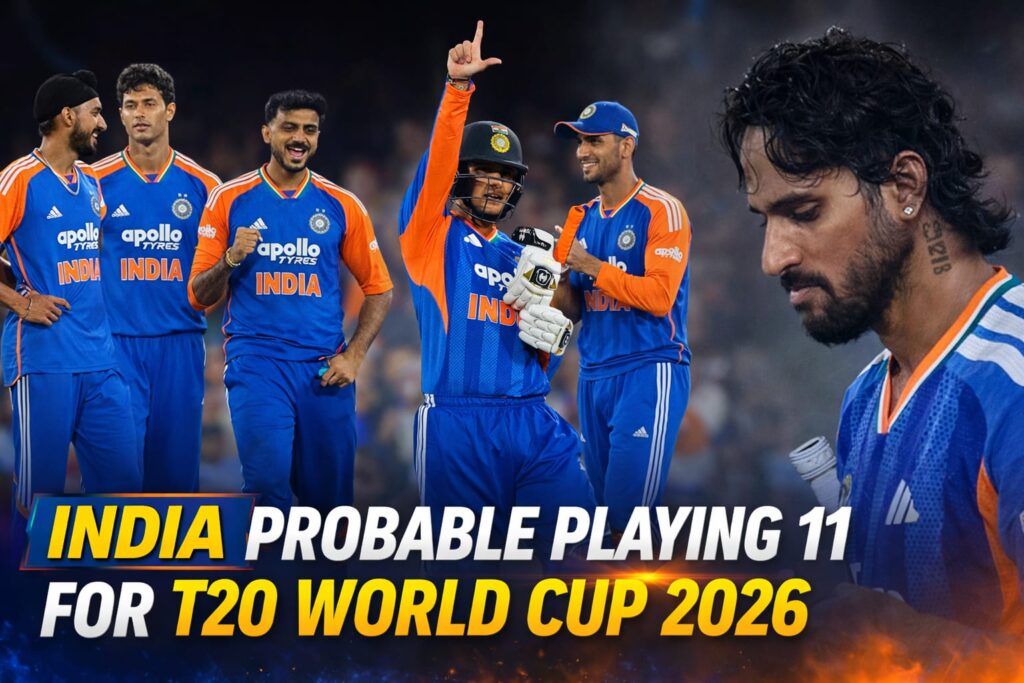
India Probable Playing 11 for T20 World Cup 2026: Full Squad Analysis
A New Chapter in Indian T20 Cricket: India Probable Playing 11 for T20 World Cup 2026
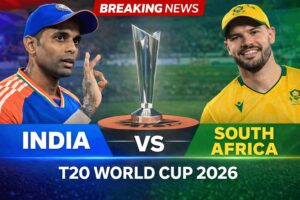
The ICC Men’s T20 World Cup 2026 marks a significant transition in Indian cricket history. With legendary players like Virat Kohli, Rohit Sharma, and Ravindra Jadeja retiring from T20 Internationals, the Board of Control for Cricket in India (BCCI) has unveiled a dynamic, youthful squad that blends explosive talent with strategic versatility. Announced on December 20, 2025, this 15-member contingent will be led by modern T20 maestro Suryakumar Yadav, signaling a shift toward aggressive, fearless cricket.
Announced in December 2025, India’s squad for the tournament reflects modern T20 thinking—multi-skill players, explosive batting depth, and spin-heavy bowling combinations suited to Indian and Sri Lankan conditions.
This comprehensive analysis will examine India Probable Playing 11 for T20 World Cup 2026, delve into squad selection rationale, assess player roles and recent form, and explore how this team is positioned to defend their title on home and Sri Lankan soil.
Table of Contents:
Tournament Overview: T20 World Cup 2026 at a Glance
| Detail | Information |
|---|---|
| Hosts | India & Sri Lanka |
| Format | ICC Men’s T20 World Cup |
| India Captain | Suryakumar Yadav |
| Vice-Captains | Hardik Pandya, Axar Patel |
| Defending Champions | India |
| Playing Conditions | Spin-friendly, high-scoring venues |
Official India probable playing 11 for T20 World Cup 2026:
The selection committee led by Ajit Agarkar has clearly emphasized T20 specialists over reputation, a refreshing shift in approach.
India Squad – Player Roles & Strengths
| Player | Role | Key Strength |
|---|---|---|
| Suryakumar Yadav (C) | Batter | 360° stroke play |
| Abhishek Sharma | Opener | Explosive powerplay hitting |
| Ishan Kishan (WK) | Opener | Aggressive left-hander |
| Tilak Varma | Batter | Middle-order stability |
| Hardik Pandya (VC) | All-rounder | Power + pace |
| Sanju Samson | Batter/WK | Flexible middle-order |
| Axar Patel (VC) | All-rounder | Spin + finishing |
| Washington Sundar | All-rounder | Powerplay control |
| Rinku Singh | Batter | Death overs finisher |
| Jasprit Bumrah | Bowler | Elite death bowling |
| Arshdeep Singh | Bowler | Left-arm variation |
| Kuldeep Yadav | Spinner | Wicket-taking wrist spin |
| Varun Chakaravarthy | Spinner | Mystery bowling |
| Shivam Dube | All-rounder | Six-hitting ability |
| Harshit Rana | Bowler | Emerging pace option |
India Probable Playing 11 for T20 World Cup 2026
Based on current form, team balance, and subcontinent conditions, this is the most likely India Probable Playing 11 for T20 World Cup 2026 will field in key matches.
✅ India Probable Playing 11 for T20 World Cup 2026
- Abhishek Sharma – Left-handed opener
- Ishan Kishan (WK) – Aggressive opener
- Suryakumar Yadav (C) – No. 3 batter
- Tilak Varma – Middle-order anchor
- Hardik Pandya (VC) – Power-hitting all-rounder
- Sanju Samson – Flexible middle-order batter
- Axar Patel – Spin-bowling all-rounder
- Kuldeep Yadav – Lead wrist-spinner
- Jasprit Bumrah – Fast bowling spearhead
- Varun Chakaravarthy – Mystery spinner
- Arshdeep Singh – Left-arm pacer
T20 World Cup 2026 Warm Up Match Schedule: Complete Guide to Pre-Tournament Fixtures
Team Balance Breakdown:
| Aspect | Strength |
|---|---|
| Batting Depth | Till No. 8 |
| Bowling Options | 6 main bowlers |
| Spin Attack | 3 specialist spinners |
| Left-Right Combos | Throughout batting order |
| Death Overs | Bumrah + Arshdeep |
Opening Combination: Fearless from Ball One
Abhishek Sharma – Powerplay Destroyer
Abhishek has emerged as one of India’s most dangerous T20 openers. His ability to attack from the first over allows India to dominate powerplays consistently.
Why he fits perfectly
- High strike rate above 180
- Attacks pace and spin equally
- Ideal for flat Indian wickets
Ishan Kishan – Aggression with Balance
Ishan’s left-handed presence and recent domestic form give India stability without sacrificing explosiveness.
Key Advantage:
Two left-handed openers unsettle bowlers early and force captains to adjust fields.
Middle Order: Modern T20 Firepower
Suryakumar Yadav – Captain at No. 3
Despite recent lean patches, SKY remains India’s most impactful T20 batter. His ability to change gears instantly makes him the perfect No. 3.
Captaincy Strength
- Calm decision-maker
- IPL leadership exposure
- Tactical freedom with aggressive mindset
Tilak Varma – The Glue of the Line-up
Tilak provides balance between aggression and composure. He’s comfortable rebuilding or accelerating depending on match situations.
All-Round Core: The Engine Room
Hardik Pandya – Match-Winner in Every Sense
Hardik’s return to peak form solves multiple problems at once—finishing, fast bowling, and leadership.
Why he’s indispensable
- 140+ strike rate in death overs
- 2–3 overs of seam bowling
- Big-match temperament
Axar Patel – The Silent Match-Winner
Axar’s value goes beyond statistics. His accuracy with the ball and ability to score quick runs make him crucial on turning tracks.
Bowling Attack: Variety Meets Control
Jasprit Bumrah – India’s Trump Card
Bumrah remains the best death bowler in world cricket. His ability to defend low totals gives India confidence in pressure games.
Arshdeep Singh – Left-Arm Angle Advantage
Arshdeep complements Bumrah by attacking wickets early and offering variation at the death.
Spin Trio: Kuldeep, Varun & Axar
Subcontinent tournaments are won in the middle overs—and India’s spin attack is built exactly for that.
| Spinner | Role |
|---|---|
| Kuldeep Yadav | Strike bowler |
| Varun Chakaravarthy | Mystery & containment |
| Axar Patel | Control + matchups |
Tactical Flexibility: India’s Biggest Strength
Batting Order Adaptability –
- Hardik can be promoted in chases
- Axar used as floater vs spin
- Samson & Tilak interchangeable
Bowling Adjustments by Conditions –
| Conditions | Possible Change |
|---|---|
| Turning Track | Sundar for Arshdeep |
| Flat Pitch | Dube for Varun |
| Pace-Friendly | Harshit Rana inclusion |
Comparison: 2024 Champions vs 2026 Team
| Aspect | 2024 | 2026 |
|---|---|---|
| Captain | Rohit Sharma | Suryakumar Yadav |
| Style | Experience-driven | Fearless & modern |
| Core | Senior-heavy | Youth-centric |
| Strategy | Conservative middle | Aggressive throughout |
Frequently Asked Questions (FAQs):
Q1: Why was Ishan Kishan preferred over Sanju Samson as opener in India probable playing 11 for T20 World Cup 2026?
A: While both are in the squad, Kishan’s recent century in the Syed Mushtaq Ali final, combined with his left-handedness, provides better balance with the right-handed Sharma. Samson’s versatility allows him to anchor the middle order, a role where he has shown greater consistency.
Q2: How does this squad compare to the 2024 World Cup winning team?
A: This squad is younger and more aggressive in approach. While the 2024 team relied on experienced players like Rohit, Kohli, and Jadeja, the 2026 team banks on youthful fearlessness. The bowling attack is similarly potent, but the batting has more explosive potential throughout.
Q3: What happens if Suryakumar Yadav’s form doesn’t improve?
A: The squad has multiple players who can assume leadership. Hardik Pandya has captaincy experience, and Axar Patel is a vice-captain. Batting-wise, Tilak Varma’s form allows flexibility to shift SKY down the order if needed.
Q4: Why only three specialist pacers in the squad?
A: With the tournament in spin-friendly conditions, and Hardik Pandya providing a fourth pace option, three specialist pacers (Bumrah, Arshdeep, Harshit) were deemed sufficient. This allows for an extra spinner or all-rounder in the squad.
Q5: How will the team handle death bowling without experienced specialists?
A: Jasprit Bumrah remains the world’s best death bowler. Arshdeep Singh has improved significantly in this phase, and Hardik Pandya provides a third option. The team might also use clever slower balls from spinners in the final overs.
Q6: Is the batting order too inexperienced for knockout pressure?
A: While young, Sharma, Varma, and Samson have extensive IPL knockout experience. SKY and Pandya bring World Cup experience. The team management believes this blend of youthful fearlessness and selective experience is ideal for modern T20 cricket.
Q7: What about Rinku Singh’s limited opportunities?
A: Rinku remains a specialist finisher whose role is situational. In matches where early wickets fall, he provides experienced crisis management. His position reflects the modern T20 strategy of role-specific players rather than fixed XI members.
Final Verdict: Can India Defend the Title?
India probable playing 11 for T20 World Cup 2026 represents a perfect blend of youth and experience, aggression and calculation, specialization and flexibility. The transition from the Kohli-Rohit era has been managed thoughtfully, with Suryakumar Yadav’s innovative captaincy poised to usher in a new approach.
The squad’s strengths are evident:
- Explosive top order capable of dominating powerplays
- Multiple spin options for subcontinent conditions
- Batting depth that allows freedom to aggressors
- World-class death bowling led by Bumrah
Potential concerns include:
- Captaincy pressure on SKY’s individual performances
- Middle-order consistency under tournament pressure
- Fielding standards of a relatively inexperienced unit
However, playing at home (and in similar Sri Lankan conditions) provides a significant advantage. The selectors have clearly prioritized T20-specific skills over reputation, creating a squad tailored for modern cricket’s shortest format.
As defending champions, India will face immense pressure, but this youthful squad appears unburdened by past failures and ready to create its own legacy. The blend of fearless batting, versatile all-rounders, and a potent bowling attack makes India strong contenders to not just compete, but to defend their title successfully.
The T20 World Cup 2026 will ultimately test whether India’s bold new direction can triumph on the world stage, potentially heralding the beginning of another dominant era in Indian cricket.
About The Author